From Metal to Melted Genres: The Evolution of Rock Music (1970s–2019)
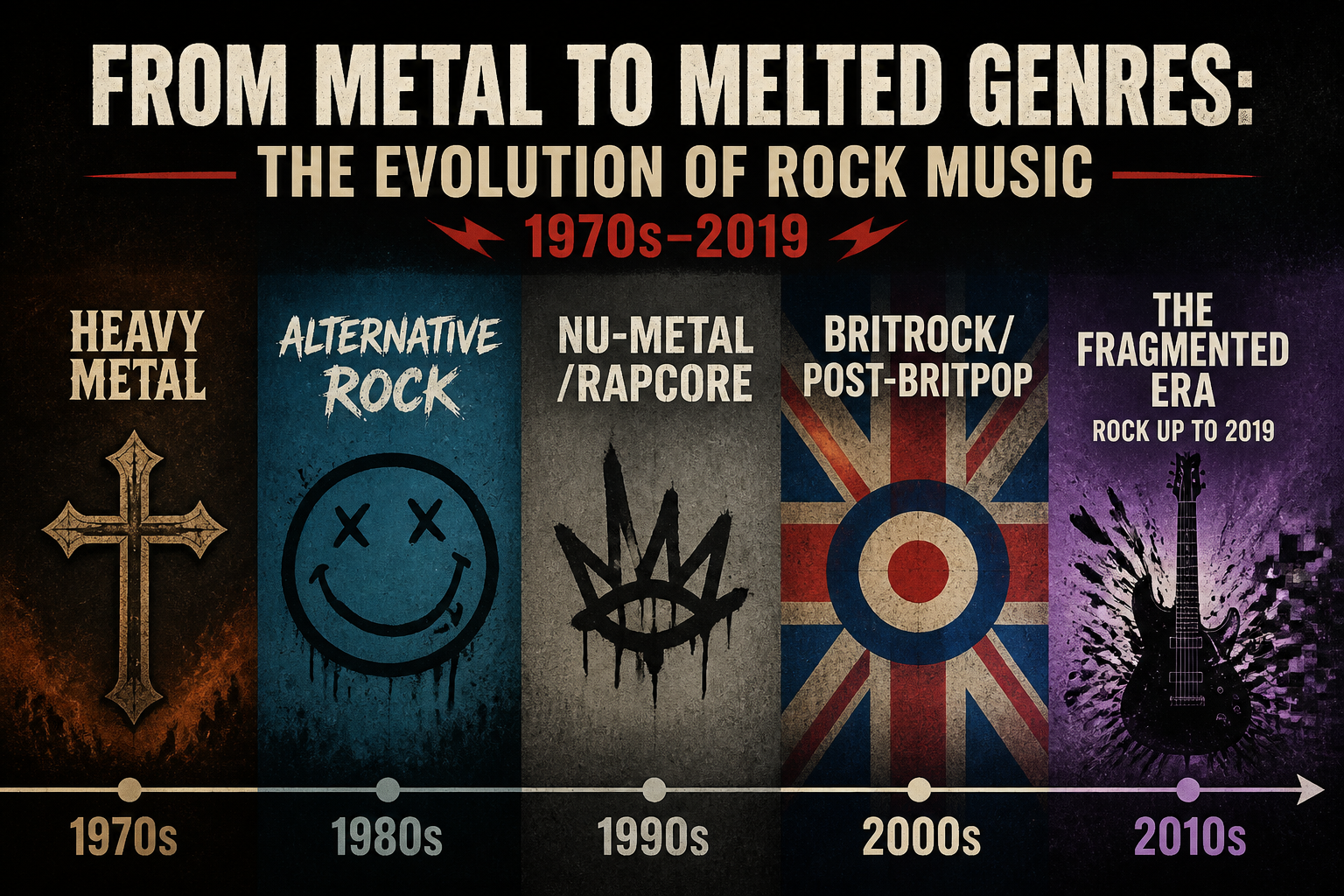
Rock music is an evolutionary marvel, constantly splitting into wild new sub-genres to capture the spirit of changing generations. From the thunderous stadium anthems of the late 20th century to the electronic-fused hybrids of the 2010s, rock has always been a shapeshifter. For anyone who grew up with a pair of headphones glued to their ears, mapping this sonic journey feels like tracking the soundtrack of our own lives.
Here is how rock music transformed across its most definitive eras up until 2019.
Heavy Metal: The Foundation of Sonic Power
In the 1970s and 1980s, rock became faster, heavier, and darker. Musicians pushed their amplifiers to the absolute limit, trading traditional blues structures for aggressive showmanship and technical precision.
- The Sound: Blistering guitar solos, driving double-bass drumming, and complex musical arrangements.
- The Pioneer: Metallica redefined the genre in the 1980s by spearheading the “Thrash Metal” movement. Tracks like “Enter Sandman” and “Master of Puppets” brought underground speed and aggression straight into mainstream stadiums worldwide.
Alternative Rock: The Raw, Emotional Shift
By the early 1990s, the polished, theatrical style of 80s metal gave way to a stripped-down, deeply vulnerable movement known as alternative rock.
- The Sound: Distorted guitar riffs, a dynamic “quiet-verse, loud-chorus” structure, and lyrics dealing with alienation and self-reflection.
- The Pioneer: Incubus perfectly captured the artistic freedom of this era. By blending traditional alternative rock with funk, jazz, and creative turntable scratches on albums like Make Yourself (1999) and tracks like “Drive”, they proved that rock could be heavy yet incredibly melodic.
Nu-Metal and Rapcore: The Aggressive Fusion
As the late 1990s bled into the early 2000s, rock underwent a massive cultural collision. Musicians began tearing down the walls between heavy rock, hip-hop, and electronic music.
- The Sound: Down-tuned, heavy guitar riffs mixed with hip-hop beats, scratching, and vocal styles that shifted between rapping and screaming.
- The Pioneers:
- Limp Bizkit became the poster children for Rapcore and Nu-Metal, dominating MTV with explosive anthems like “Rollin’” and “Break Stuff”.
- The Prodigy, while rooted in electronic dance music, heavily infused their tracks with raw punk-rock energy and distorted metal guitars, creating genre-bending masterpieces like “Firestarter” that resonated deeply with rock crowds.
Britrock and Post-Britpop: The Melodic Renaissance
While America was embracing heavy nu-metal, the United Kingdom was busy refining stadium-sized melodies and atmospheric rock landscapes at the turn of the millennium.
- The Sound: Lush piano arrangements, sweeping acoustic guitars, emotional vocal falsettos, and anthemic, sing-along choruses.
- The Pioneer: Coldplay spearheaded this massive melodic movement. Their debut album Parachutes (2000) and global hits like “Yellow” and “The Scientist” proved that rock didn’t need to scream to capture the emotional attention of millions.
The Fragmented Era: Rock Up to 2019
By the 2010s, the digital streaming boom completely dissolved traditional genre boundaries. Rock became less about strict categories and more about curation. Heavy metal acts experimented with orchestral scores, while alternative bands integrated mainstream pop production. By 2019, rock had cemented its legacy not as a single sound, but as an attitude—proving that whether it is driven by a piano or a seven-string guitar, the core spirit of the genre remains unbreakable.